The first time most clients walk through a slab warehouse, they notice the color before they notice the stone. Bright tape. Small circular stickers. Marks scattered across an otherwise beautiful surface.
It can look careless, even alarming. Why does this slab have red markings? Why are there dots near the edge? Did something go wrong?
Nothing has gone wrong. In fact, those markings are part of what keeps the project on track.
Stone moves through several hands between selection and installation. The colored tape is not decoration. It is a quiet system of communication that carries decisions from the showroom floor to digital layout to fabrication. Each color has a purpose.
Blue Tape: Client Notes in Real Time
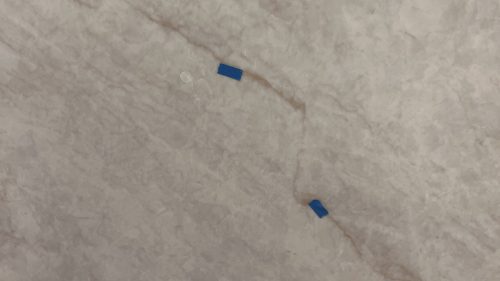
Blue tape is usually applied during slab viewing. It marks areas a client is drawn to, sections they may want featured on an island, or areas they would prefer to avoid. It is instinctive and often helpful in the moment. When standing in front of a full slab, it is easier to respond physically than to describe what you are seeing.
That said, tape alone is not the final decision. Once measurements are taken and layouts are prepared, those preferences are translated into digital approvals. Clear layout documentation is more precise than any strip of tape. Blue tape starts the conversation. It does not finish it.
Red Tape: Areas That Require Evaluation
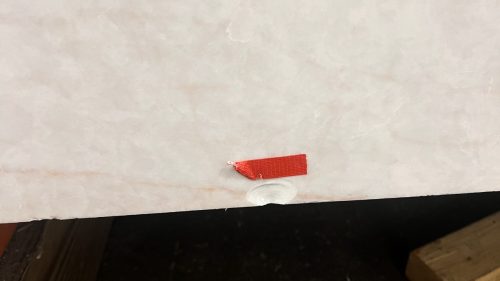
Red tape is used internally to flag material characteristics that need to be considered during layout.
This may include natural fissures, minor scratches, edge chips, or blowouts on the face or back of the slab. Natural stone is not manufactured to perfection. It carries variation, and occasionally, areas that require strategic planning.
Red does not automatically mean rejection. More often, it means awareness. During layout, those sections are either worked around or positioned intentionally so they do not affect structural integrity or finished appearance. Identifying them early protects the integrity of the final install.
Green Tape: Placement and Finish Clarity
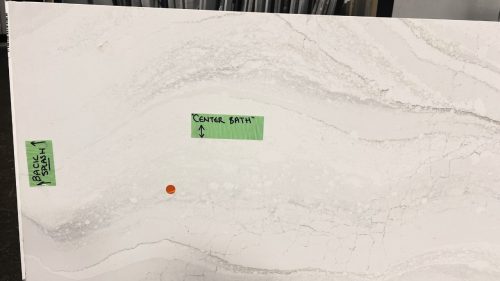
Green tape serves a more specific purpose.
In some cases, it marks a client’s preferred placement. During project viewings or stone approvals, a dramatic vein might be designated for an island, a vanity, or a full-height backsplash. That reference point carries forward into the layout process so the original intent is preserved. On dual-finish materials, green tape may instead identify which surface is being scanned. When a slab has both a polished and a leathered side, clarity matters. Once the slab is moved and laid flat for fabrication, there is no room for confusion about which face was approved.
Green tape maintains alignment between selection and production.
Orange Dots: Orientation Control
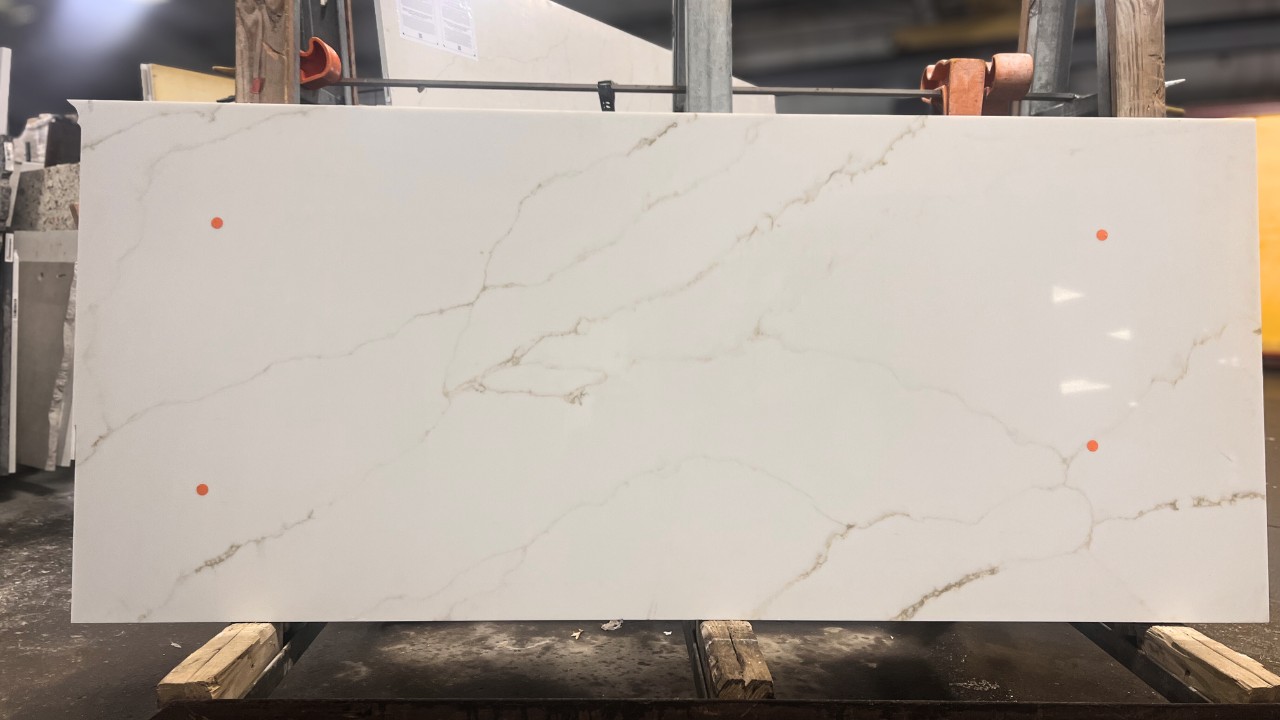
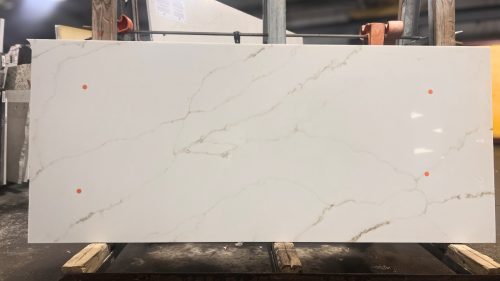
The small orange dots are rarely noticed by clients, but they are among the most important markings in the building. Every slab is stickered with orientation markers when it arrives. Stone is stored upright, then later placed flat on a cutting table. Without a consistent reference point, orientation could easily be reversed.
The orange dots ensure that when the slab is cut, it is right side up and aligned exactly as it was scanned during digital layout. Vein direction, seam alignment, and finished orientation all depend on that consistency.
From intake through fabrication, those dots keep everything synchronized.
What the Stone Markings Really Represent
Stone is a natural and diverse material. It does not arrive uniform, and it does not move through the shop untouched. It requires evaluation, planning, and coordination. The tape you see is evidence of that process. It marks preference, structure, orientation, and finish. It reflects conversations that have already happened and safeguards decisions that will carry through to installation.
When you see a slab stippled with colored markings, you are not looking at a problem. You are looking at a project in motion, carefully documented so that what was chosen in the warehouse is what arrives in your home. Have more questions? Rumford Stone is here to answer them!