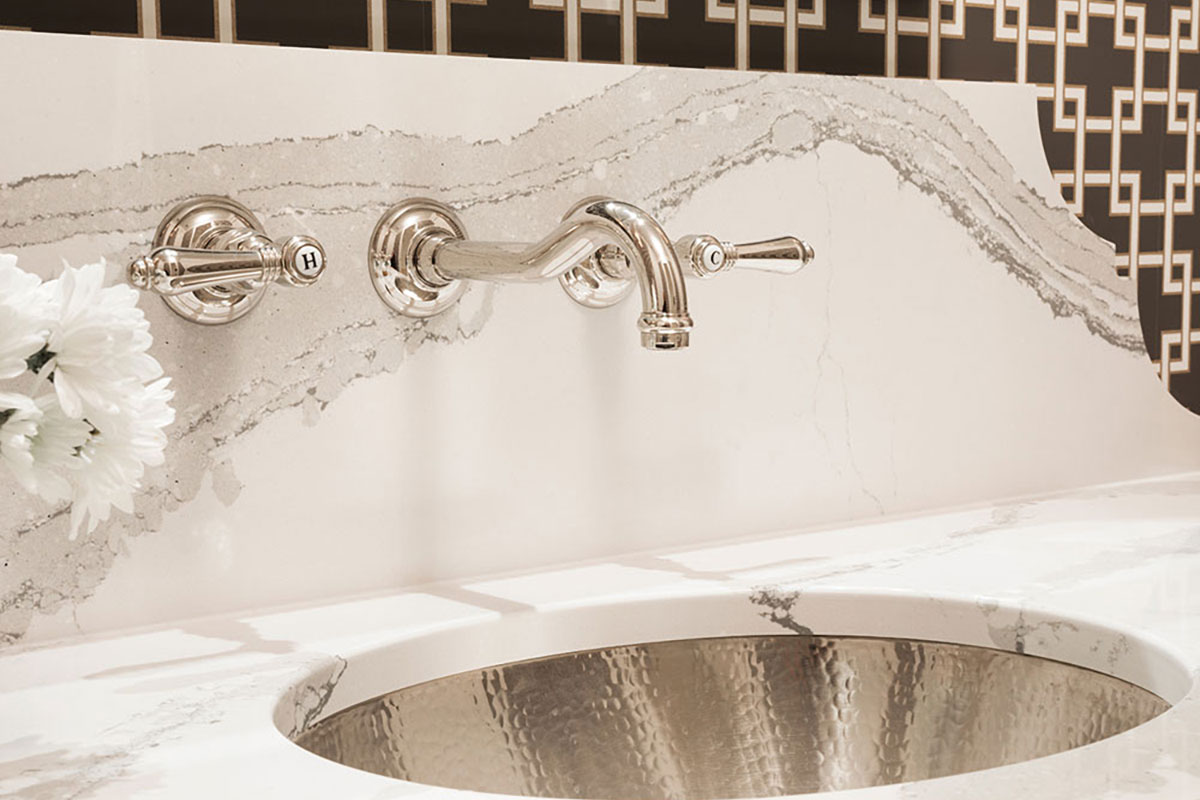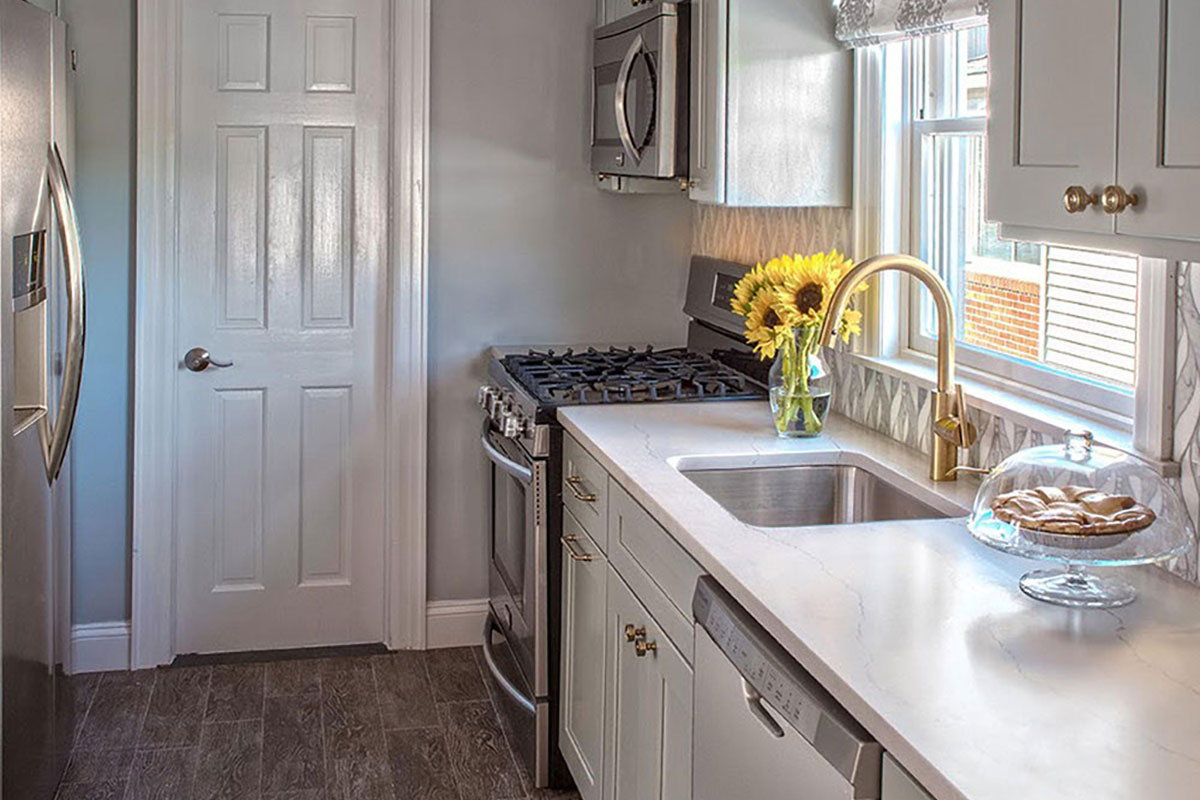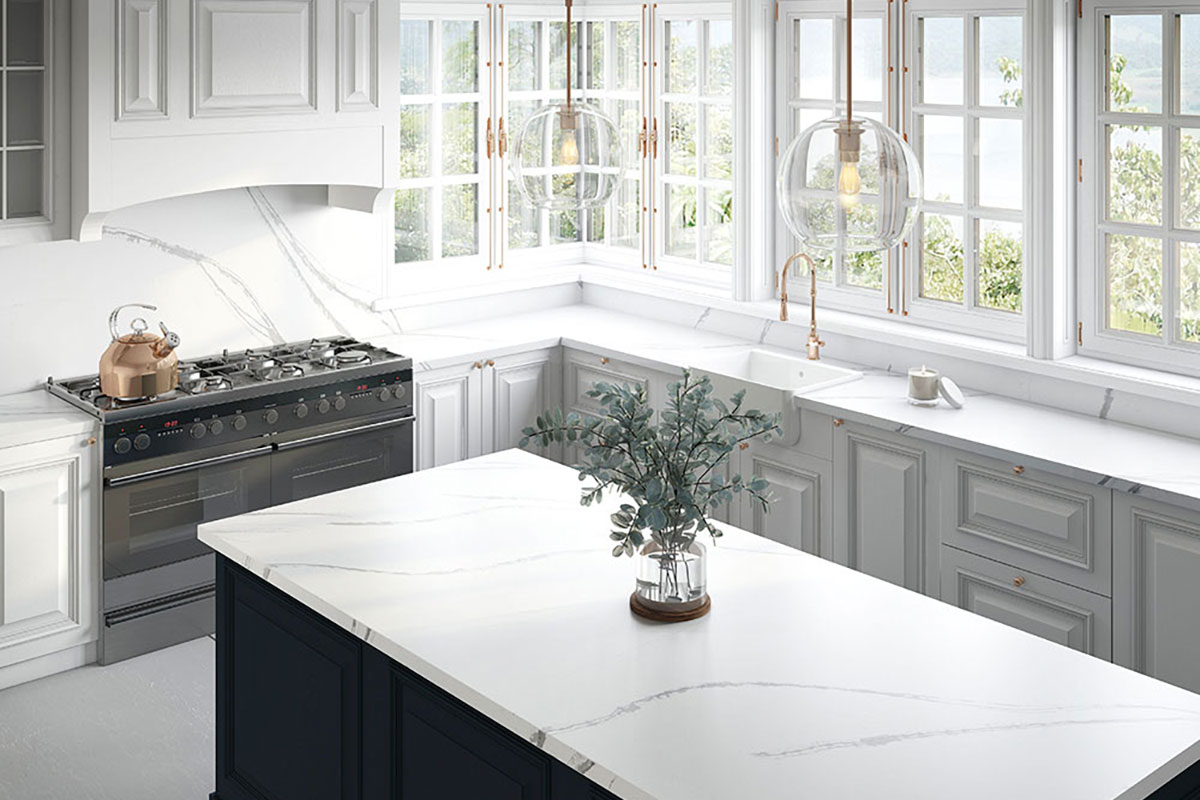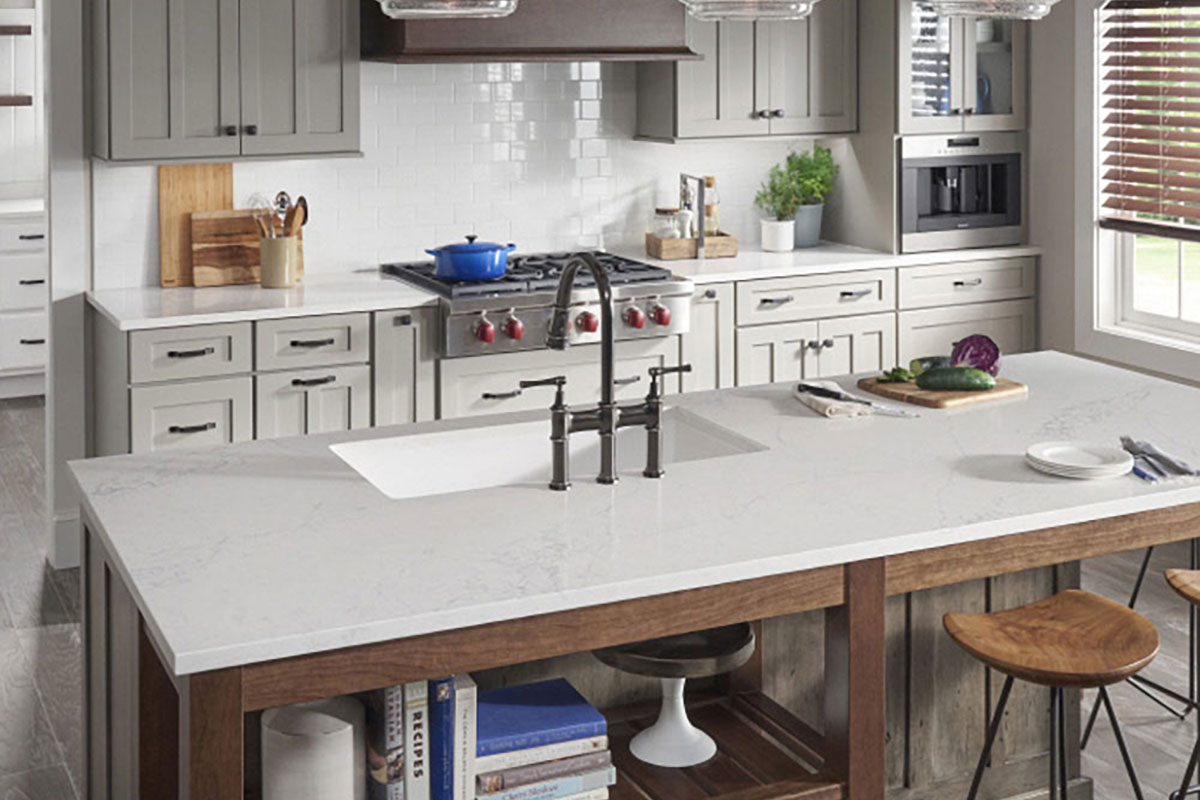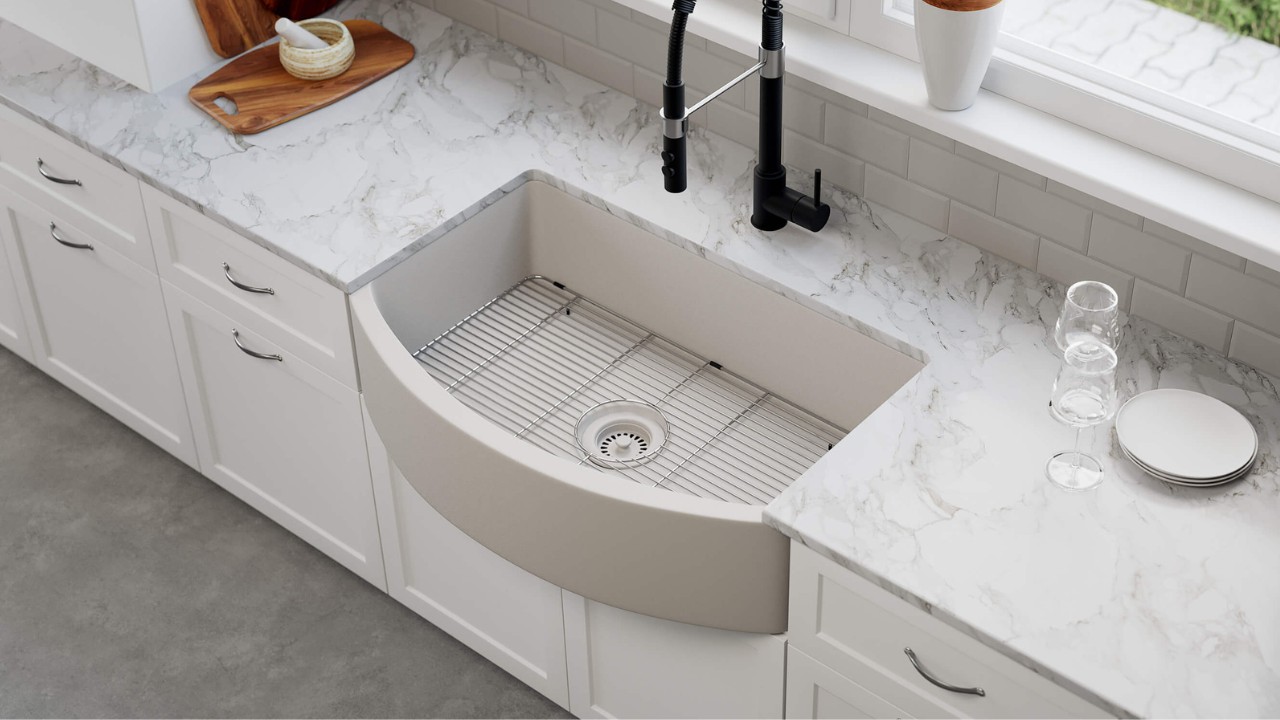
Apron-front sinks have become a common feature in kitchen design, often acting as a visual anchor that helps define the entire countertop layout. They bring presence to a space, but they also introduce a level of variability that doesn’t exist with standard undermount or drop-in sinks.
At Rumford Stone, one of the key requirements before templating is straightforward: the apron sink must be on site and placed in its final position within the cabinet, but it should not be permanently secured. This step directly impacts how accurately we can fabricate your countertops and how smoothly installation will go.
The Challenge With Templating Around an Apron Sink 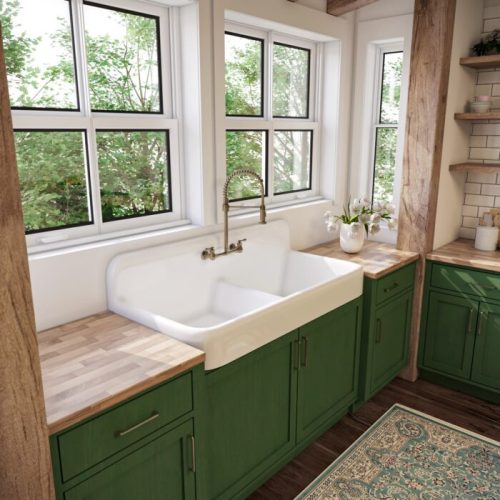
Templating is where precision begins, and every measurement we take carries through to fabrication. When an apron sink isn’t in place, we’re missing critical reference points that guide those decisions.
Apron sinks are not as standardized as they’re often assumed to be. Even when labeled with the same dimensions, there can be differences in overall size, corner radius, and how far the apron projects beyond the cabinet face. Without the sink physically positioned in the cabinet, we’re working off assumptions rather than actual conditions, which is where issues tend to start.
What Can Go Wrong Without the Sink in Place
Most of the risk comes down to alignment. The finished reveal — how much of the sink is exposed or covered by the countertop — depends entirely on how the sink sits within the cabinet. Without that position confirmed, there’s no reliable way to determine where the front edge of the countertop should land.
Cabinet readiness also plays a role. Many apron sinks require modifications for proper support and fit, and if those changes happen after templating, they can shift the sink’s position and affect the final result. Height is another factor that often gets overlooked. The vertical placement of the sink determines the cutout and influences how the countertop aligns across the run.
Even small differences between sink models can create complications. Two sinks listed at the same size may still vary in shape or apron thickness, which changes how the countertop needs to be fabricated. When these variables aren’t established ahead of time, the likelihood of installation delays, on-site adjustments, or even remakes increases.
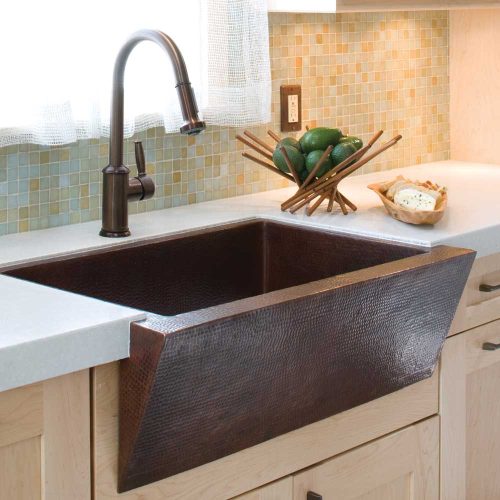 Rumford’s Approach
Apron sinks must be placed in the cabinet in their final position prior to templating, but should not be permanently secured. This allows us to template to real conditions while still leaving room for minor height adjustments during countertop installation.
With the sink in place, we can measure the true position, confirm the reveal, and align the countertop precisely with the cabinetry and surrounding elements. It removes guesswork and allows the fabrication to match the installation.
Setting the Project Up for Success
This requirement isn’t about adding steps. It’s about protecting the outcome and making sure each phase of the project builds on accurate information.
When the sink is properly positioned before templating:
- Measurements reflect actual conditions
- Fabrication aligns with the installed sink
- Installation moves more efficiently
- The finished result looks intentional and consistent
It also helps avoid delays and unnecessary rework.
Planning Ahead
If your project includes an apron-front sink, plan for it to be on site and set in its final position within the cabinet before your templating appointment. It does not need to be permanently installed, but it does need to be properly supported and correctly placed.
If timing or coordination is a concern, the Rumford Stone team can work with your contractor or cabinet installer to make sure everything is ready when it needs to be. Getting this step right early makes a measurable difference in how the project comes together.