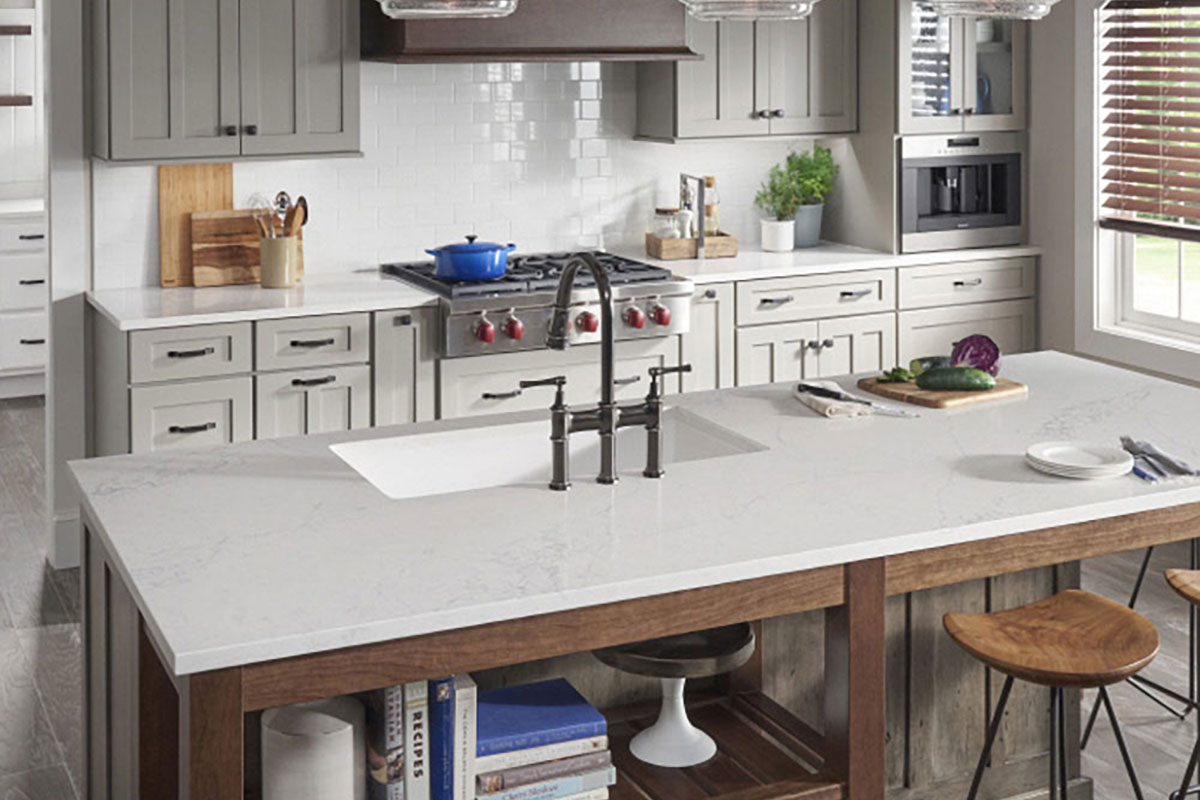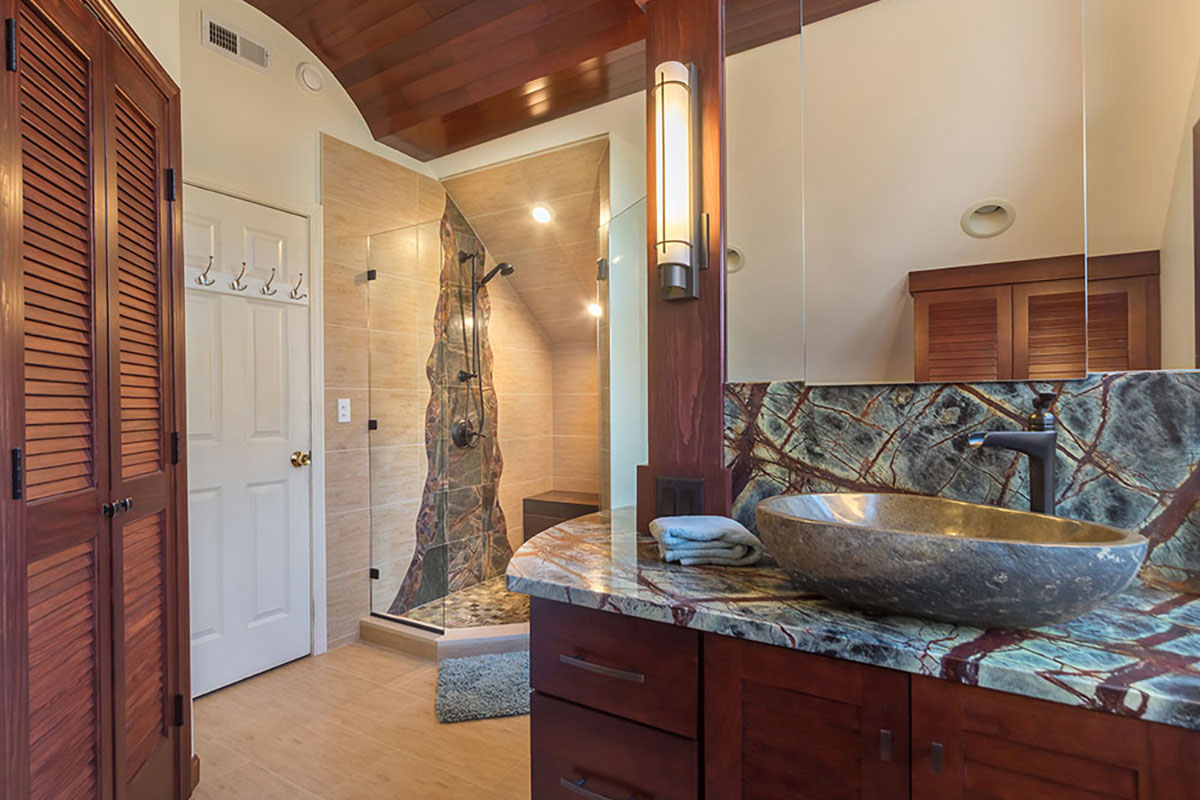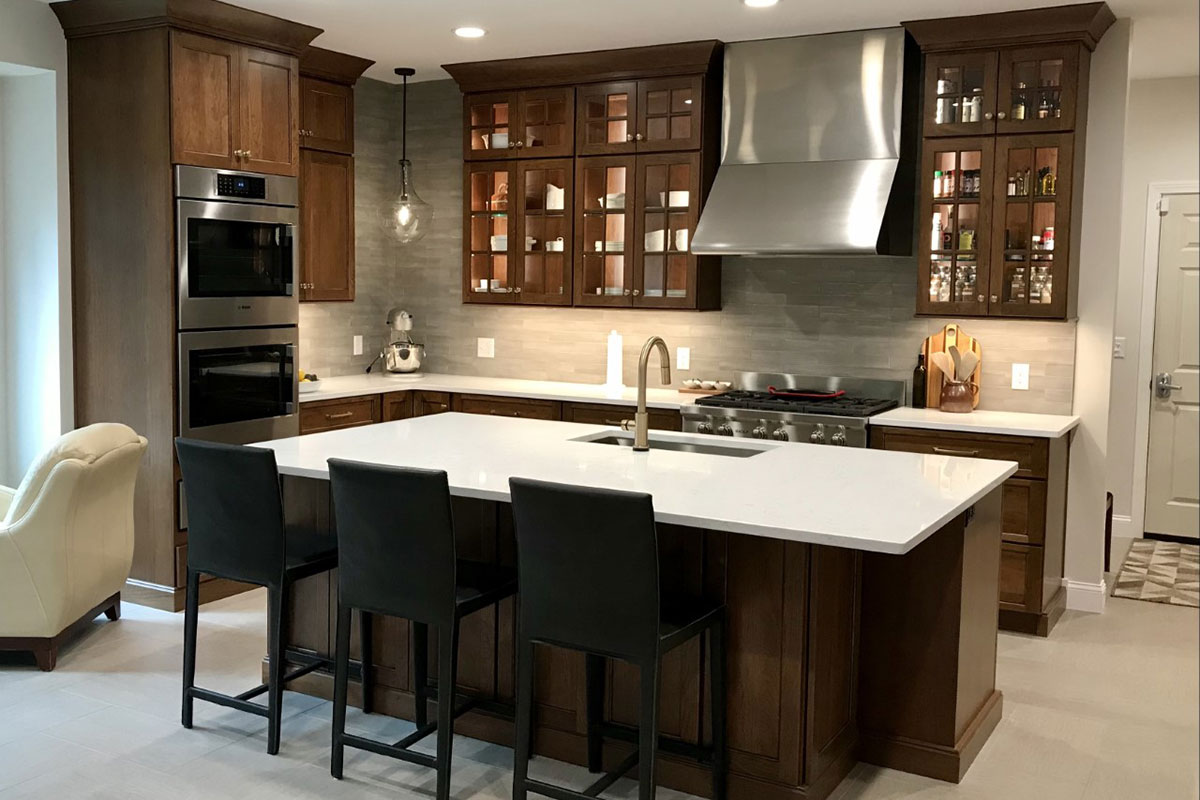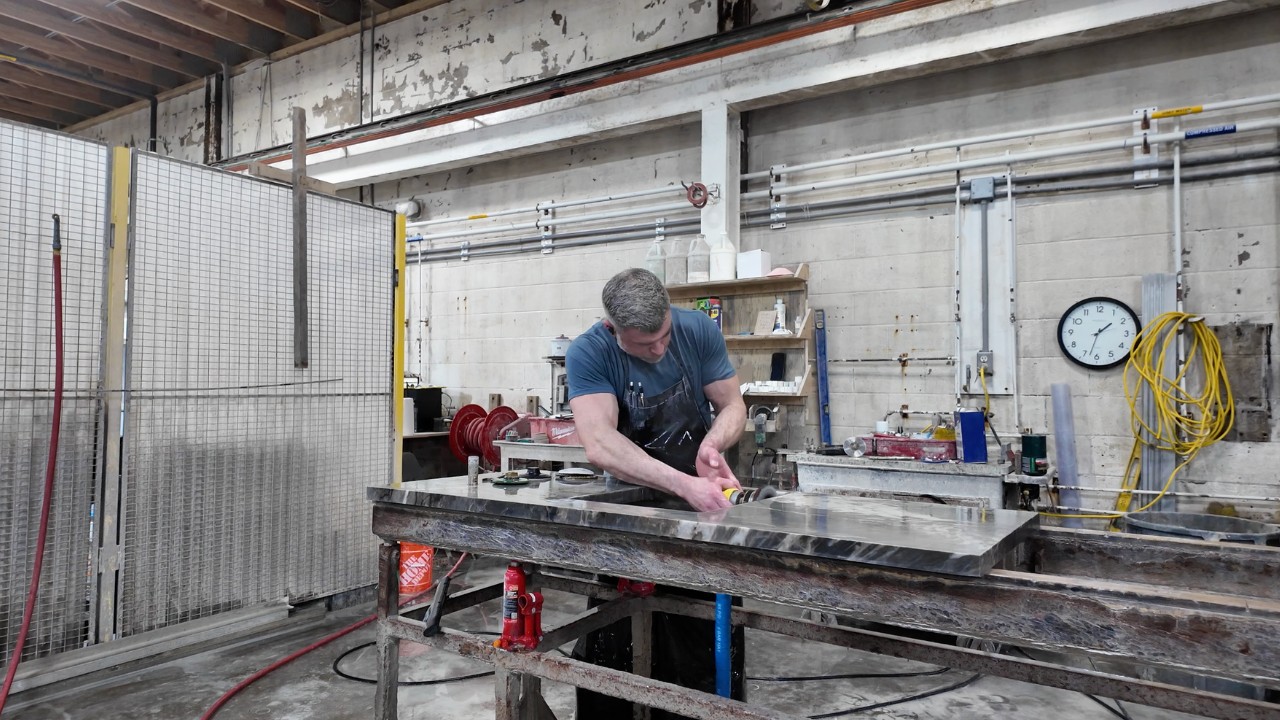
Homeowners often ask for a thicker countertop edge, but what they usually want is visual weight. In most cases, that thickness is not a single solid slab. It is created through lamination, a fabrication method that builds up the edge profile without increasing the thickness of the entire surface.
Understanding how laminated edges are constructed helps determine whether they are the right choice for your project.
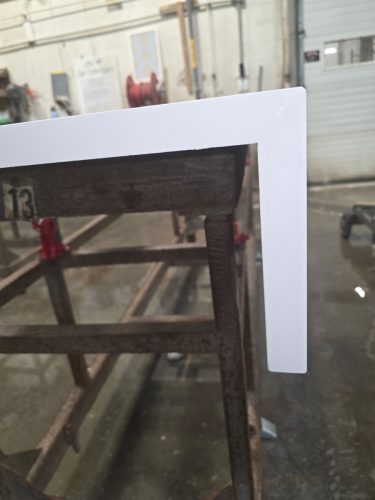
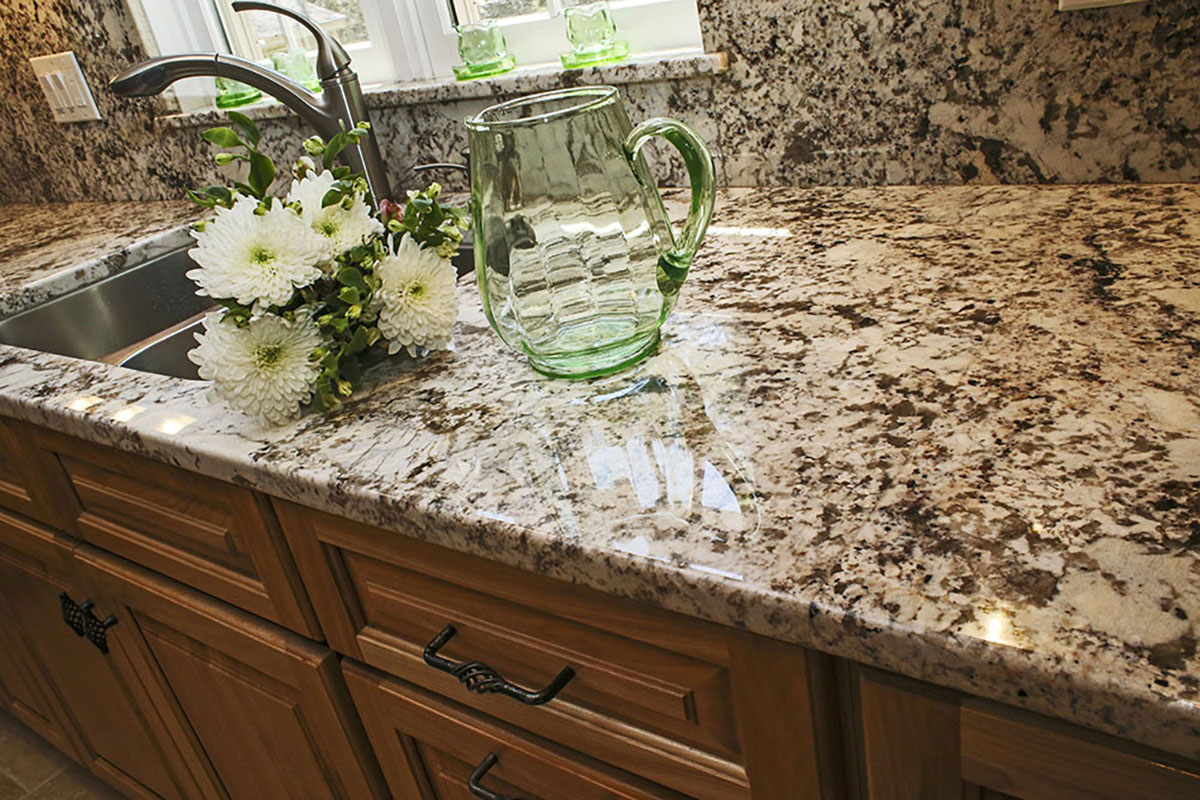
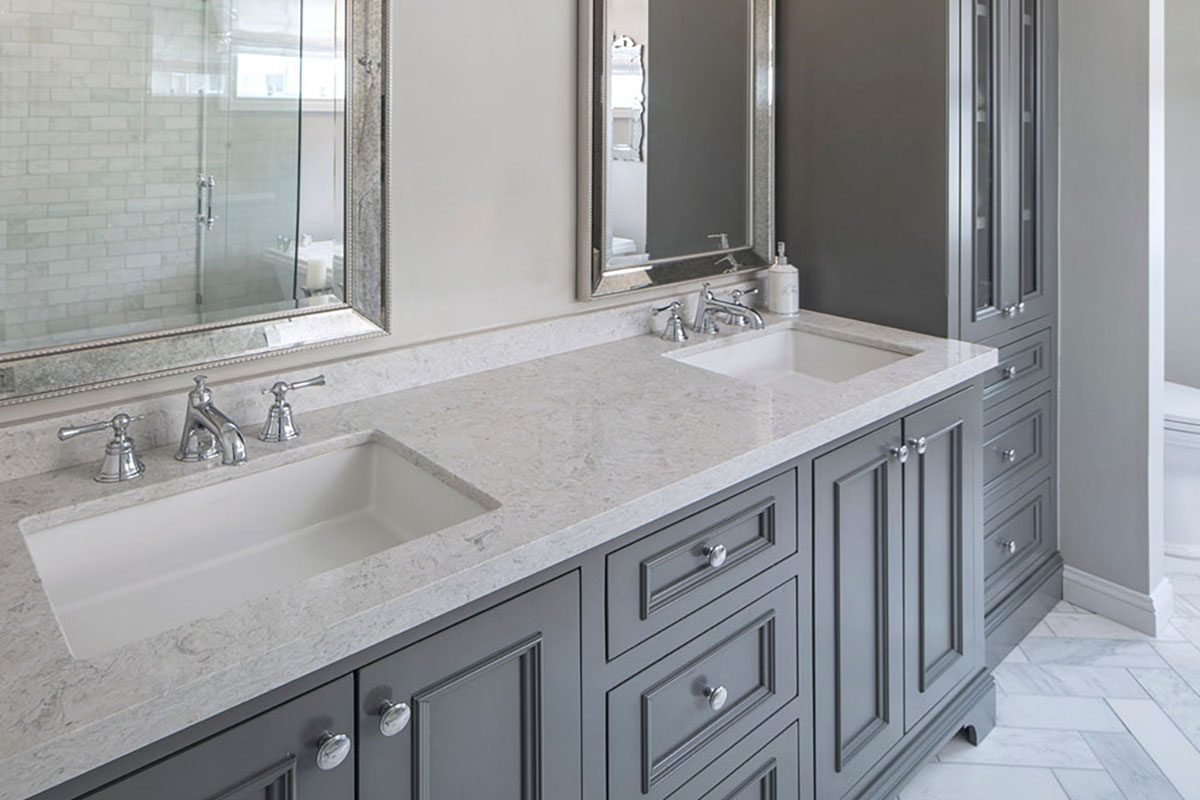
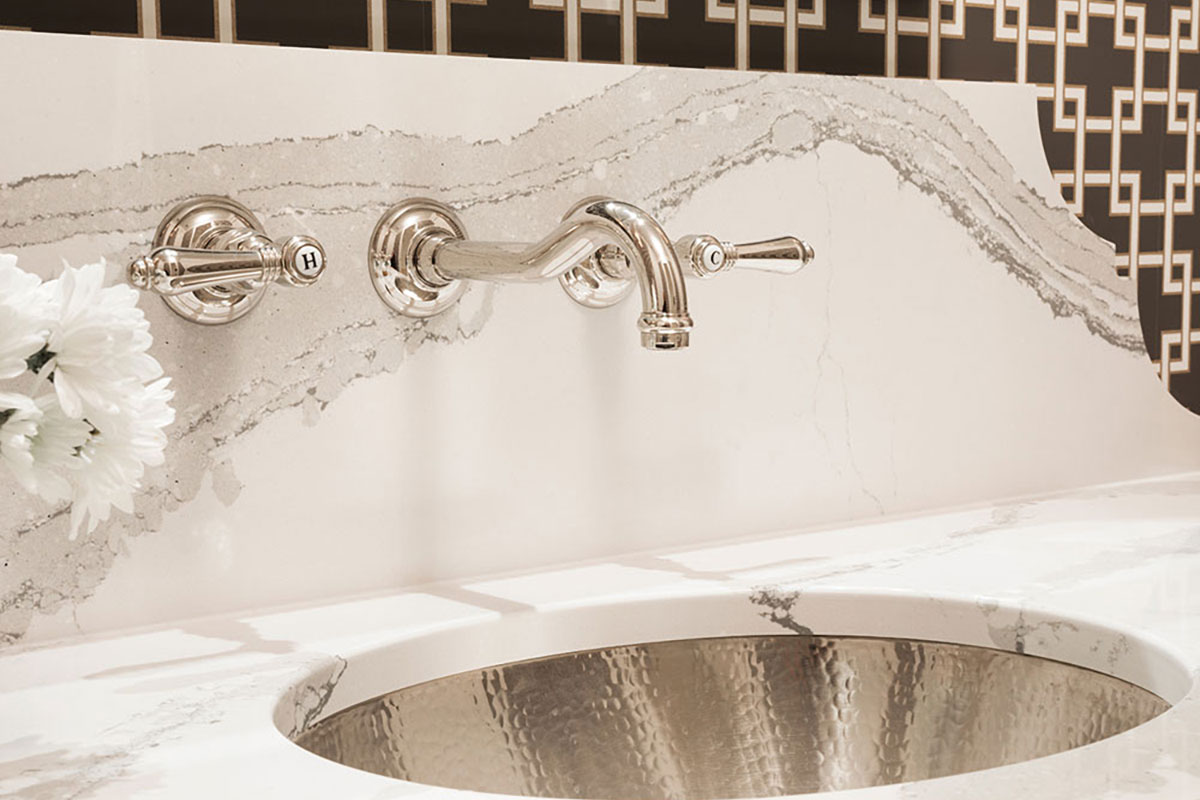
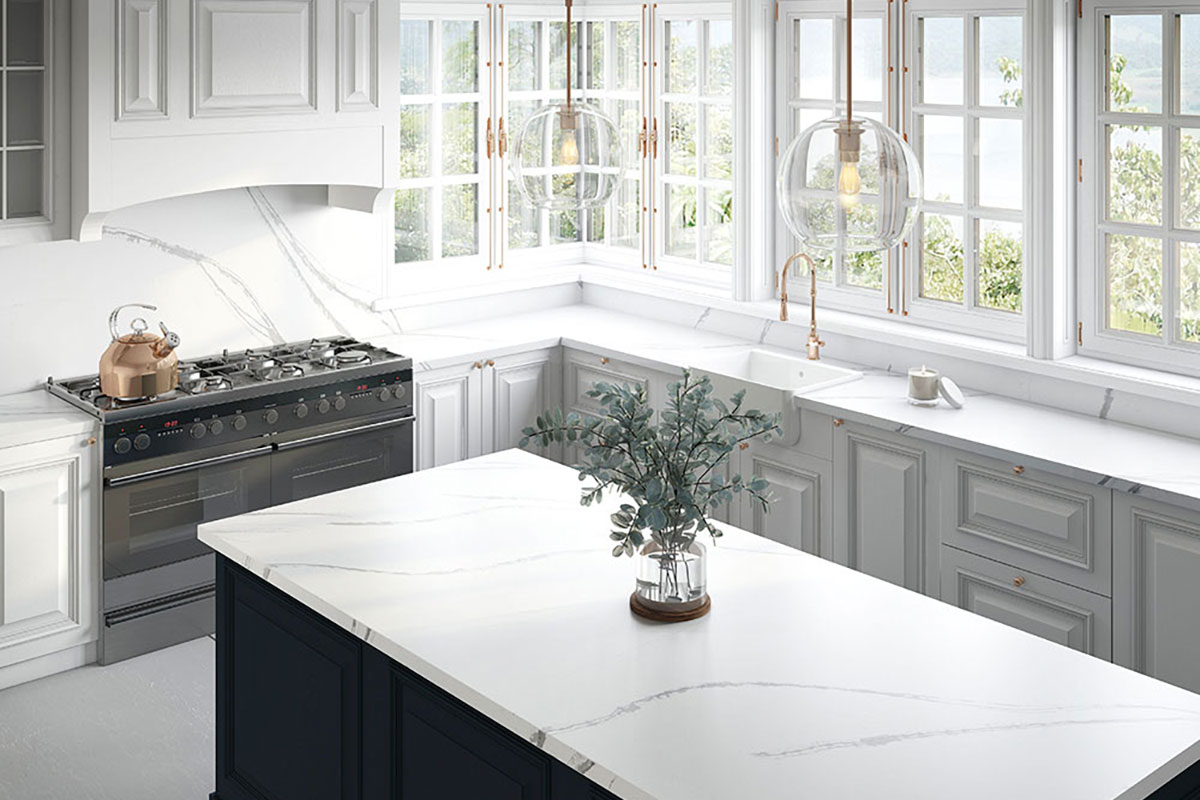
A laminated edge created with the mitered edge technique
What Is a Laminated Edge?
A laminated edge is not the same thing as a laminate countertop. Laminate is a surface material. A laminated edge refers to a fabrication method used to build up the thickness of stone or engineered slabs. A laminated edge is created by bonding a strip of the same stone to the underside of the countertop edge. The strip is cut from the slab used for the countertop so color and movement remain consistent.
For example, a 2cm slab can be built up to appear 4cm thick along the front edge. The body of the countertop remains 2cm. Only the exposed edge is increased. After bonding, the edge is shaped, ground, and polished so it reads as a single profile.
There are two common approaches:
Stacked lamination
The additional strip is bonded directly underneath the slab, creating a visible horizontal seam line when viewed closely.
Mitered lamination
The edge is cut at an angle, and the return piece is joined to create the appearance of a solid, full-thickness slab. Veining must be aligned carefully for this to look correct.
Each method has different fabrication demands and visual outcomes.
Why Laminated Edges Are Used
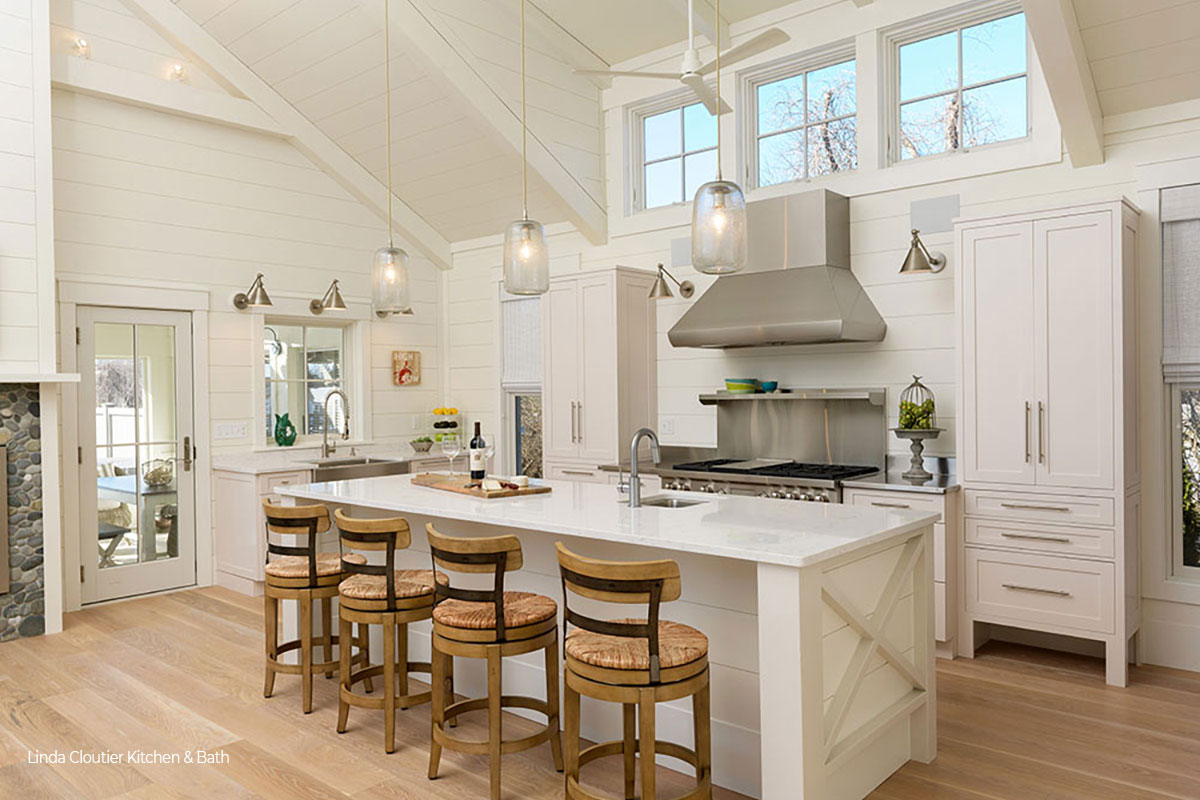
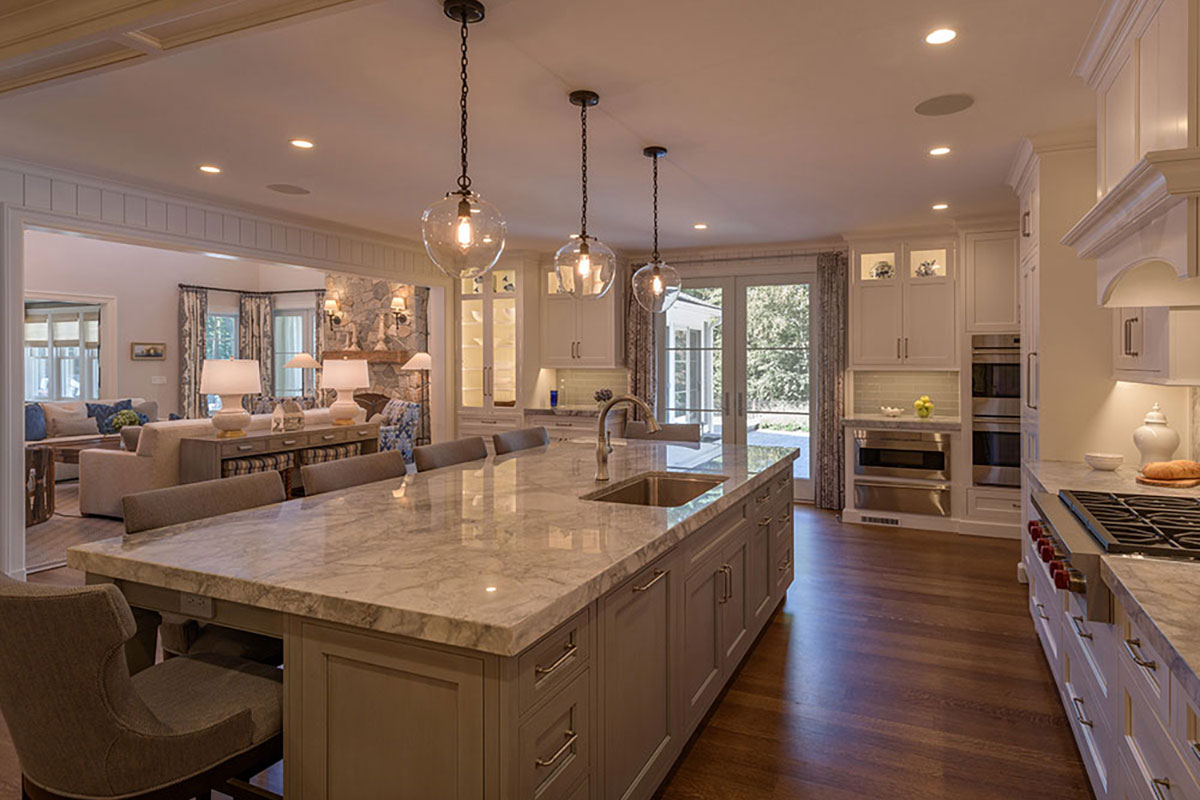
As kitchens have grown larger, island scale has changed with them. In a 16 to 20 foot open space, a long run of cabinetry can carry significant visual weight. If the countertop profile is too thin, the island can feel visually light compared to the millwork below it. Edge thickness plays a role in proportion. Building up the exposed edge allows the countertop to hold its own in the room without requiring a thicker slab across the entire surface.
Thickness, however, is not just a design conversation. It affects structure and installation. A full 3cm slab, or thicker material specified throughout, adds considerable weight. That weight influences cabinet support requirements, transport logistics, and how the pieces are maneuvered during install. In many kitchens, that additional structural thickness is unnecessary because the surface is fully supported by cabinetry. Lamination places visual mass only where it is seen, rather than adding material across areas that do not require it. It is a fabrication strategy grounded in planning, not decoration.
There is also a material allocation component to consider. Stone is purchased by the slab, and thicker material increases cost. Starting with 2cm material and laminating only the exposed edges can, in some cases, reduce overall slab usage compared to specifying thicker slabs everywhere. That does not make lamination a shortcut. The process requires precise cutting, adhesive bonding, clamping, curing time, and detailed finish work to ensure the seam is controlled and the polish is consistent. Any cost difference comes from how material is distributed, not from reduced labor or lower standards.
Durability Questions
A properly fabricated laminated edge is structurally sound. Industrial stone adhesives are engineered for long-term bond strength. When the seam is prepped correctly and clamped under controlled conditions, failure is rare. Most edge damage occurs from impact at corners, regardless of whether the slab is laminated or solid thickness.
Thickness alone does not determine durability. In day to day use, other factors have a greater impact on how a countertop performs over time. The radius at the corners affects how vulnerable an edge is to chipping. A sharp, squared corner will always be more susceptible to impact than one with a slight eased edge. The chosen edge profile also plays a role, as certain profiles distribute force better than others. Proper cabinet support underneath the slab is critical, particularly near overhangs and appliance cutouts. And finally, how the surface is used matters. Stone is durable, but it is not immune to repeated impact or misuse.
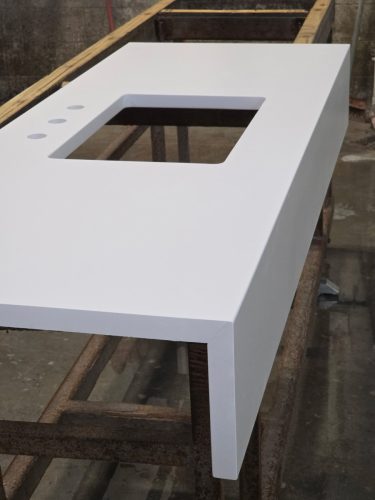
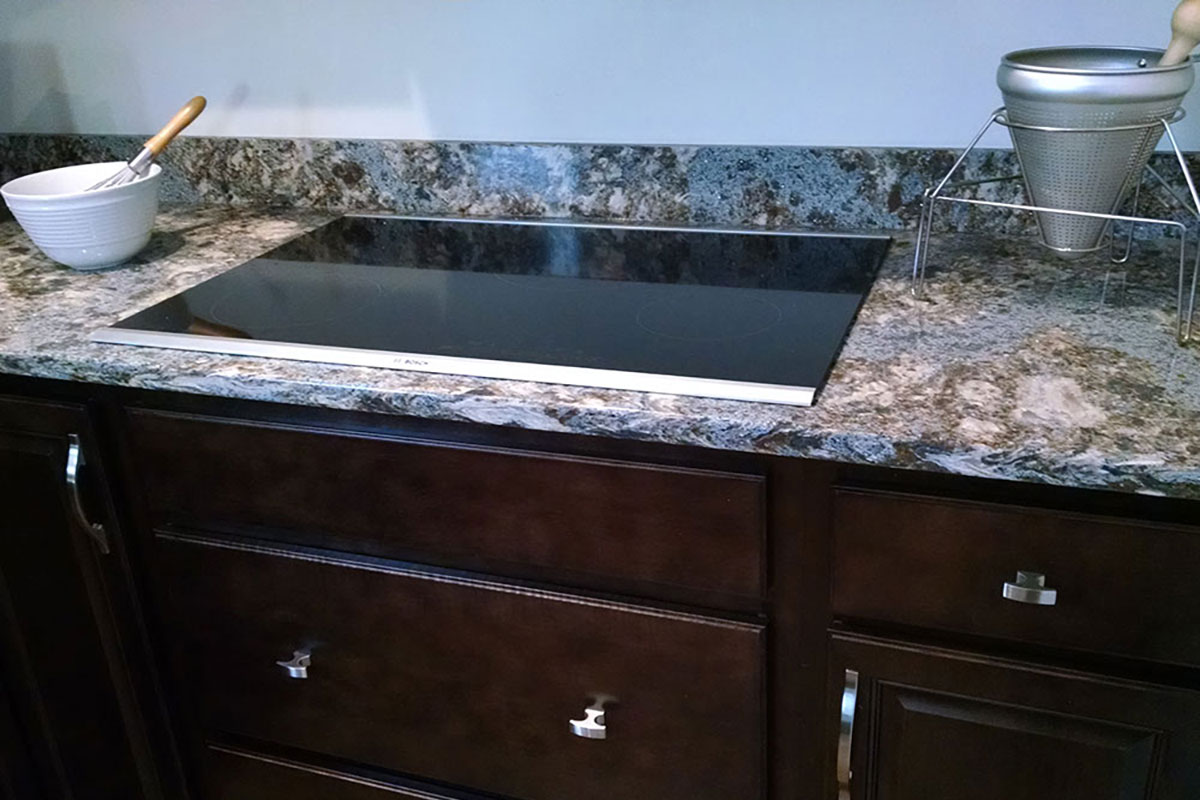
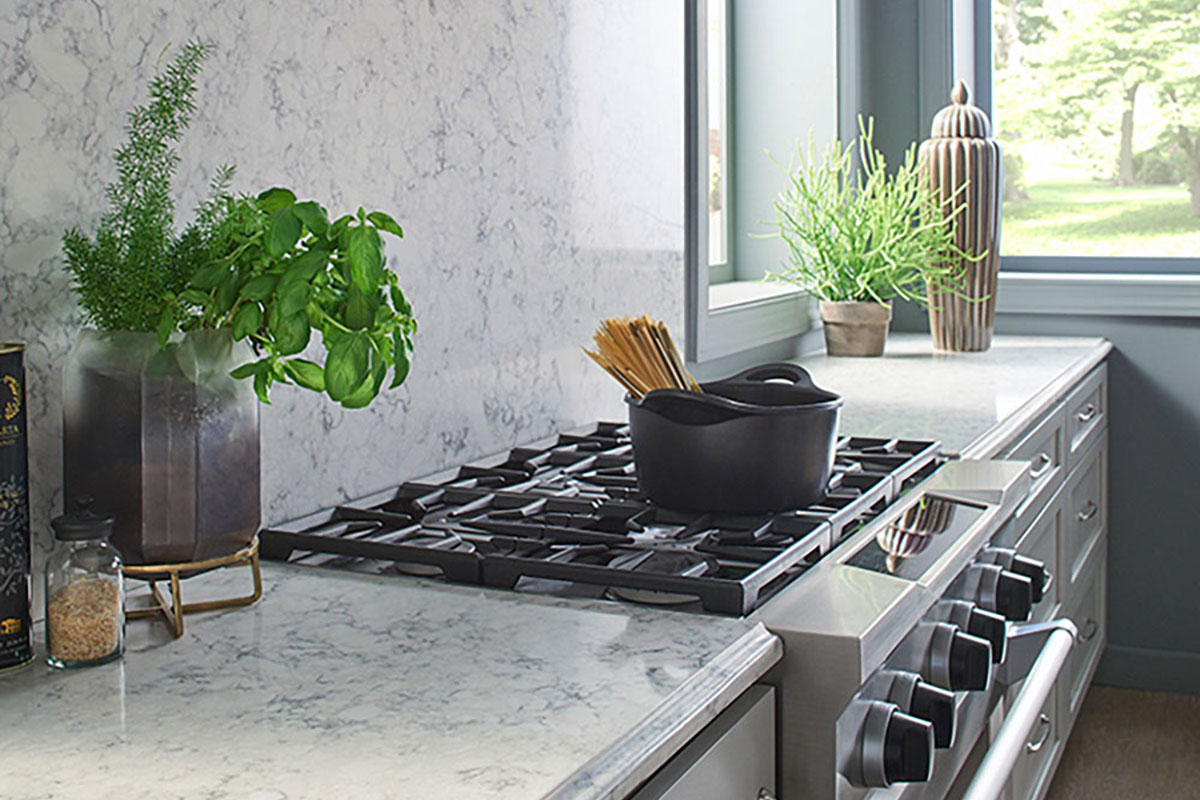
This countertop will feature a laminated edge along one side
When Lamination Makes Sense
Laminated edges are most often used on large kitchen islands, particularly when seating sides are fully exposed and the edge becomes a dominant visual line. They are also common in projects that call for a substantial square profile, where added thickness reinforces the scale of the cabinetry below. In waterfall applications, lamination can help maintain visual continuity along the vertical return, especially when a heavier horizontal presence is part of the design intent. In contemporary kitchens with long sightlines, a built-up edge can anchor the space in a way a thinner profile cannot.
They may be unnecessary in smaller kitchens or where cabinetry already carries visual weight. Thickness should respond to scale, not preference alone.
What to Discuss Before Choosing Lamination
Before finalizing edge thickness, review:
Slab thickness available in your selected material
Cabinet support structure
Seam placement near corners
Vein alignment if choosing a mitered edge
Overall island length and sightlines
This conversation should happen during layout approval, not after fabrication has begun. Quality countertop fabricators, such as Rumford Stone, offer digital layouts where you can ensure vein alignment best matches your expectations. Laminated edges are a practical tool in fabrication. When used intentionally and executed with precision, they solve proportion and structural challenges without overbuilding the entire surface.